

One Book, Two Stories
I stumbled on a treasure at the Salvation Army Thrift Store. The biography of Chicago "Black Sox" player Buck Weaver also held an unexpected memoir of two old friends

Part I. The Story of the Book
When I was prepping for my bar mitzvah at Hebrew school many years ago, our rabbi allowed us to wear baseball caps for head covering instead of the traditional kippah.1 Of course I wore my White Sox cap. I remained loyal to my White Sox, despite growing up in the north suburbs of Chicago where Cub fans thrived. It turned out I had (and still have) two religions: Judaism and the White Sox, but not always in that order.
Twenty-five years ago, the Sox buzz-sawed their way through the season. They were the hottest team in major league baseball. In post-season play leading to the 2005 World Series championship, the Sox racked up an impressive record of 11-1. Manager Ozzie Guillén was in full-mondo crazy mode, He whipped his boys to World Series glory. The Boston Red Sox, Los Angeles Angels of Anaheim, and Houston Astros (at the time a National League team) went down in record order.
From there, it was a zig-zig vortex to the bottom of the bottom and the worst of the worst. Though the Sox made it to postseason playoffs in 2008, 2020, and 2021, the team grew increasingly terrible, culminating in the abysmal 2024 season of 41–121, the worst win-loss record in modern baseball history. This past 2025 season wasn’t much better, with a finale of 60 wins and 102 losses.2 I don’t need to read The Book of Job. I’m a White Sox fan.
Still, I remain loyal to the South Siders. I guess it’s in my DNA to love the Sox, regardless of today’s horror show on the field. My father, a die-hard Cubs fan, could never figure out how he raised a die-hard White Sox fan.3
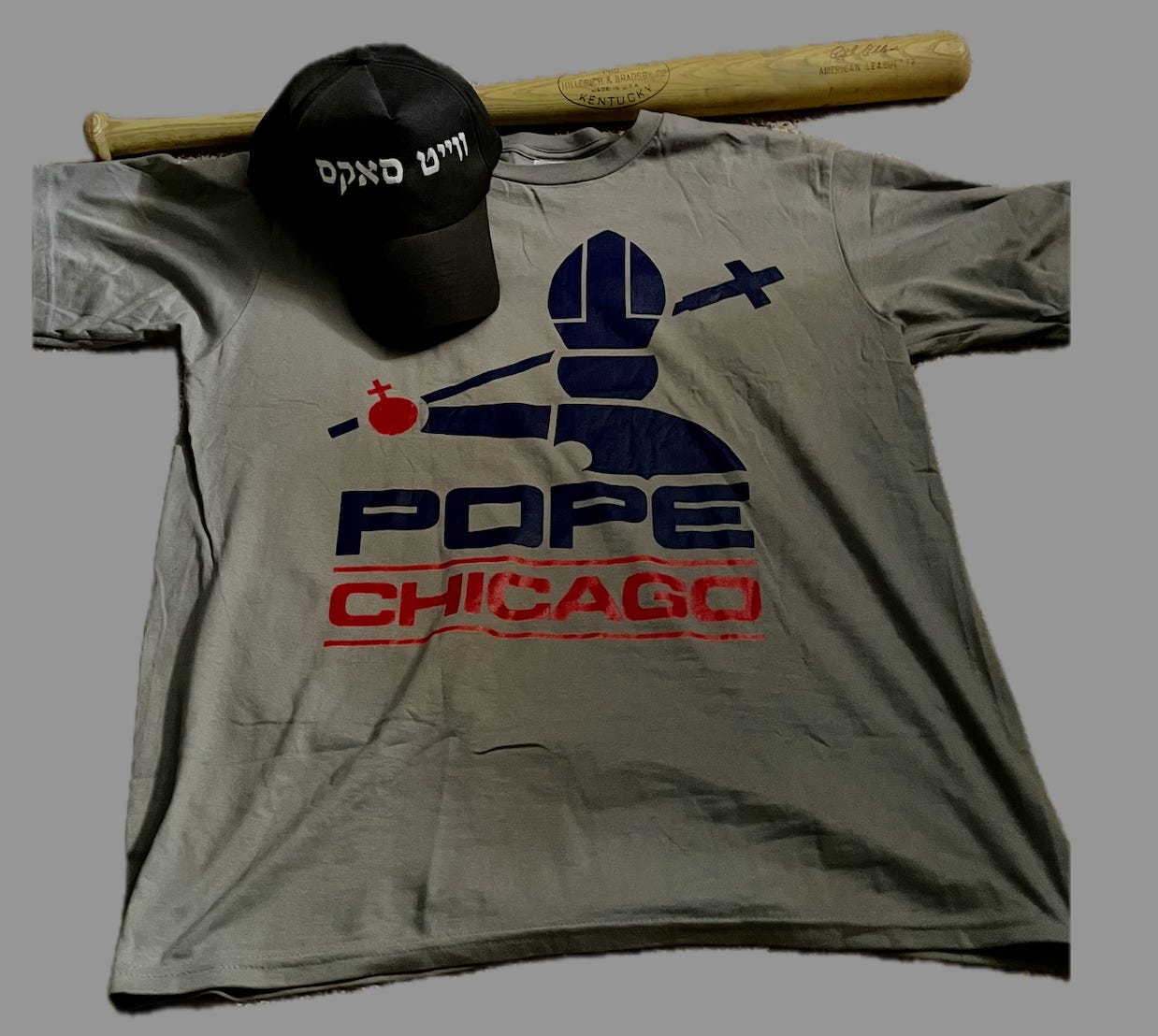

My other passion is books. In a lowball estimate, it’s safe to say I’m usually juggling my reading to three to five books concurrently, both fiction and nonfiction. I wouldn’t be able to read as much as I want if I wasn’t splitting time between multiple books. I am a voracious and ferocious reading maven.
One of the best joints to find great books at bargain prices is your local Salvation Army Thrift Store. Their shelves are jam-packed and uncategorized. You’ll find a science fiction book slammed next to a romance novel next to a classic next to a biography next to a reference next to a Harry Potter book next to an anthology of short stories next to a self-help book next to a cookbook next to a . . .
You get the idea. Books at Salvation Army Thift Stores are both bountiful and cheap. Prices range between 95 cents to five bucks, tops. Not bad, if you’re willing to spend quality time browsing through titles shelved together with neither rhyme nor reason.

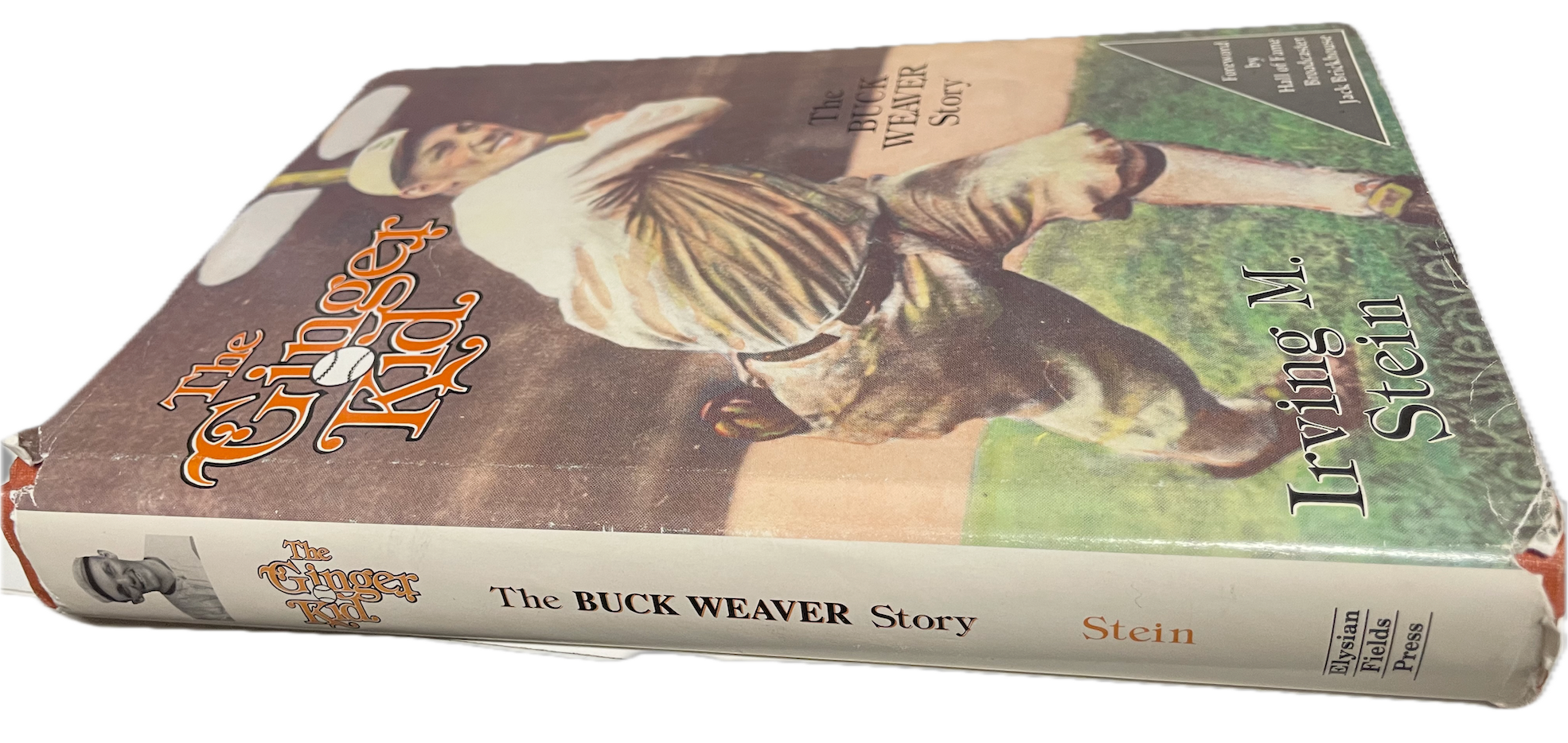
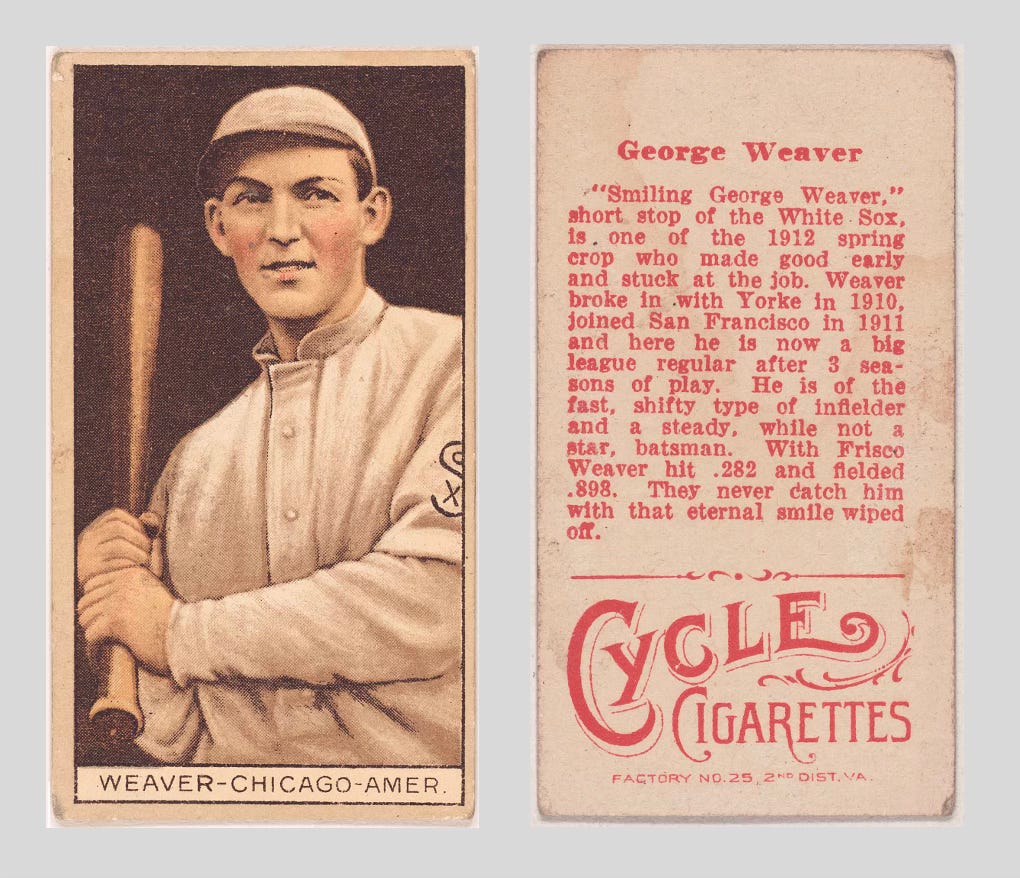
Not too long ago, perusing the shelves at my local Salvation Army Thrift Store, one book caught my eye: The Ginger Kid: The Buck Weaver Story by Irving M. Stein. It’s the biography of George Daniel “Buck” Weaver, who played for the White Sox from 1912 through 1920. Weaver was one of the best third basemen in the team’s history, if not major league baseball overall. Ty Cobb, another baseball legend of the second and third decades of the 20th century, claimed he would never bunt in Weaver’s direction. In Cobb’s hard-scrabbled opinion, a bunt to Weaver was a guaranteed out. Weaver was also talented switch hitter, racking up a solid record at bat.
Buck Weaver, as baseball history buffs know, was one of the eight “Black Sox” players accused of throwing the 1919 World Series to the Cincinnati Reds at the behest Arnold Rothstein and other gamblers. Supposedly the octet were to be well paid for their efforts—or lack thereof. (I won’t rehash the history of the Black Sox scandal here. Check the Story Links at the end of this post).
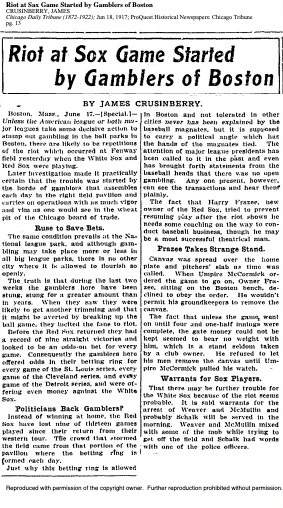
Gambling was rampant throughout the major leagues in what was known as the Deadball Era4 The right field pavilion of Boston’s Fenway Park was a notorious den of miscreants. On June 18, 1917, during a particularly bad losing stretch for both the Red Sox and the denizens of Fenway’s gamblers’ row, an angry mob leaped from the stands and stormed the field in vainglorious effort stop their monetary bleeding.5 The opposing team, no less than the White Sox, wasn’t having any of these Bean Town shennanigans. Weaver and utility infielder Fred McMullen traded fisticuffs with angry gamblers6 The game went down in baseball history with the dubious moniker of “The Gambler’s Riot.”
The next day Chicago Tribune writer James Crusinberry blasted team owners and other big wigs, whom he accused of conviently looking away from flagrant gambling rife within Fenway Park (emphasis is mine).
Unless the American league or both major leagues take some decisive action to stamp out gambling in the ball parks in Boston, there are likely to be repetitions of the riot which occurred at Fenway field yesterday when the White Sox and Red Sox were playing.
Later investigation made it practically certain that the trouble was started by the horde of gamblers that assembles each day in the right field pavilion and carries on operations with as much vigor and vim as one would see in the wheat pit of the Chicago board of trade…
Just why this betting ring is allowed in Boston and not tolerated in other cities never has been explained by the baseball magnates, but it is supposed to carry a political angle which has the hands of the magnates tied. The attention of major league presidents has been called to it in the past and even has brought forth statements from the baseball heads that there was no open gambling. Any one present, however, can see the transactions and hear them plainly.
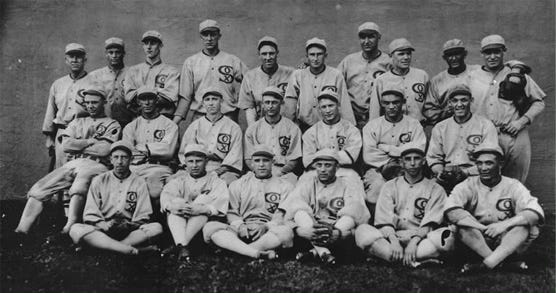
Weaver did attend two meetings wherein details of the 1919 World Series fix were hashed out. He refused to join his teammates, instead giving his all throughout the series against the Cincinnati Reds. As far as Weaver was concerned, the whole scheme was just damned foolish. He continued to shine throughout the 1920 season. The fix was a badly-kept secret throughout the ranks of team owners and sportswriters. Rumors of something rotten within the White Sox clubhouse were percolating within days after the 1919 World Series ended.
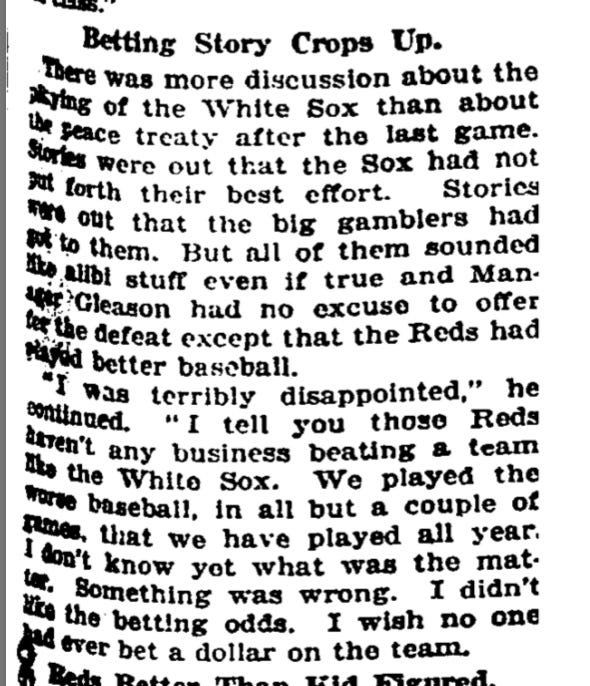
Throughout the 1920 season rumors of a fix gained traction. Everything broke open in September. Indictments quickly followed. Weaver, along with seven teammates, would ultimately be banned from Major League Baseball for life.
Many—including me—believe Weaver got a raw deal. Yes, he knew about the fix. Should he have said something? Let’s put it this way: in an ideal world, yes. But we all know there is a certain “code of silence” in just about every workplace. Speaking out is the right thing to do, at least when it comes to morality and ethics. But is it always the right thing to do?
Weaver would have risked considerable personal safety given the dangerous people behind the fix, allegedly mastermined by New York gangster kingpin Arnold Rothstein. He was in a tough spot. Though Weaver’s teammates were in the wrong, he didn’t rat on them. On its most basic level, it’s sort of an equivalent of adults admonishing little kids no one likes a tattletale. Ratting has consequences, none of them good. In modern parlance, snitches get stitches.
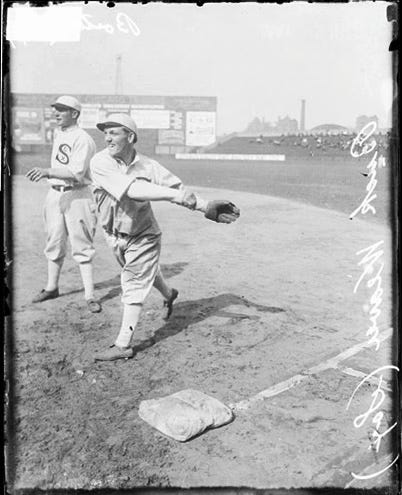
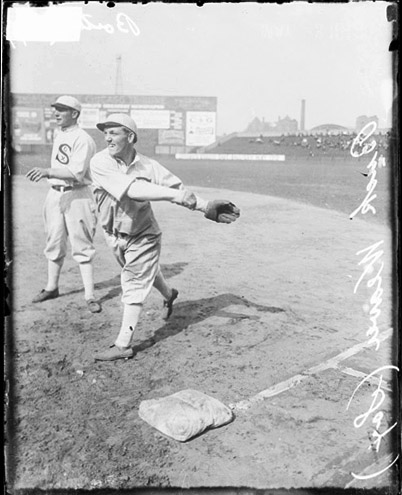
Buck Weaver’s story is complex, full of contradictions, and so terribly human. Reading The Ginger Kid: The Buck Weaver Story is well worth your time.
Part II: The Story of the Book
As I say, the book grabbed me as a White Sox fan and history writer. When I opened The Ginger Kid I was delighted to see an inscription from the book’s author. A signed book? Who doesn’t love an autographed first edition?7
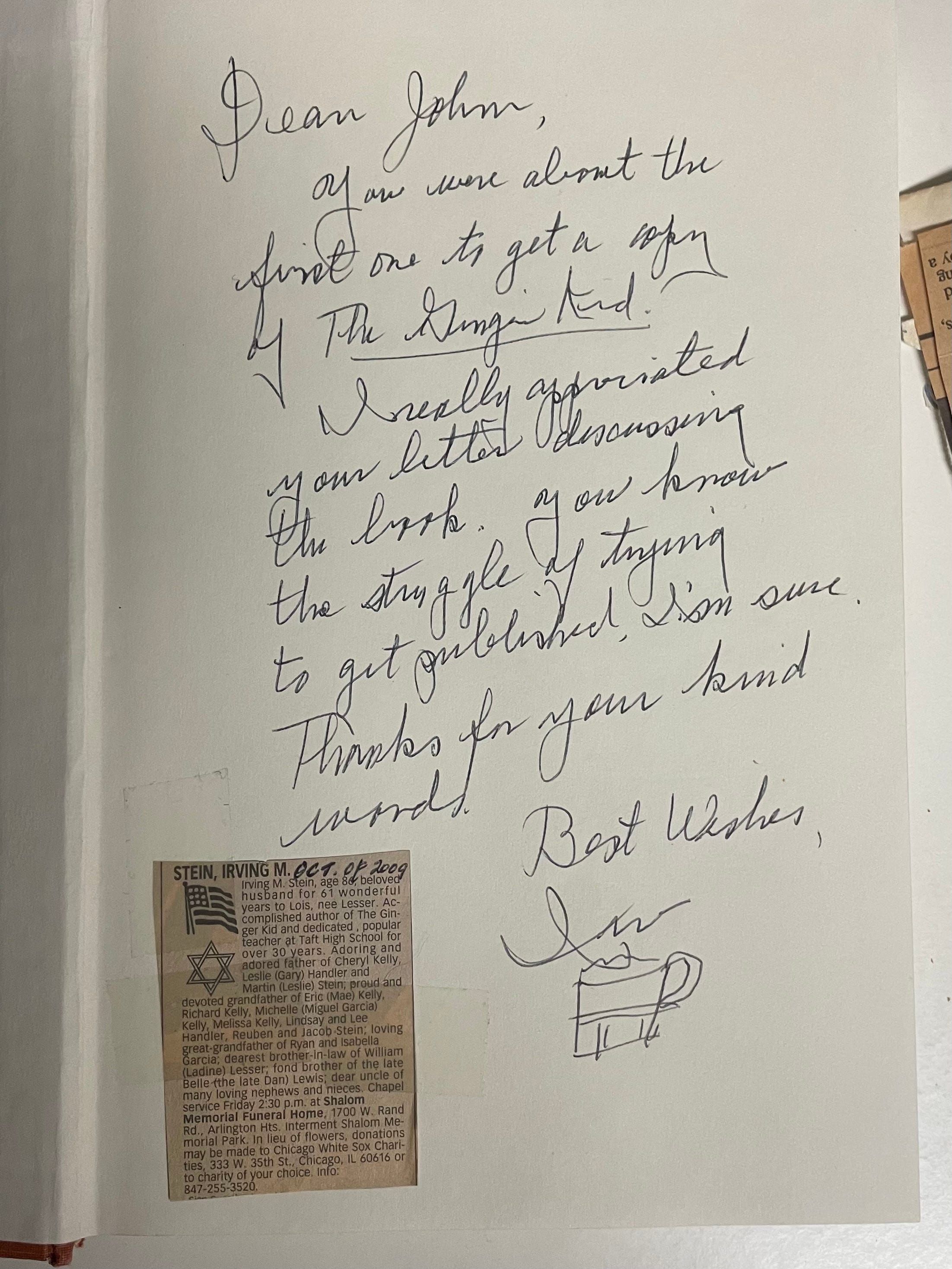
Dear John,
You were about the first one to get a copy of The Ginger Kid. I really appreciated your letter discussing the book. You know the struggle of trying to get published, I’m sure. Thanks for your kind words.
Best Wishes,
Irv
A beer mug was doodled under the author’s name.
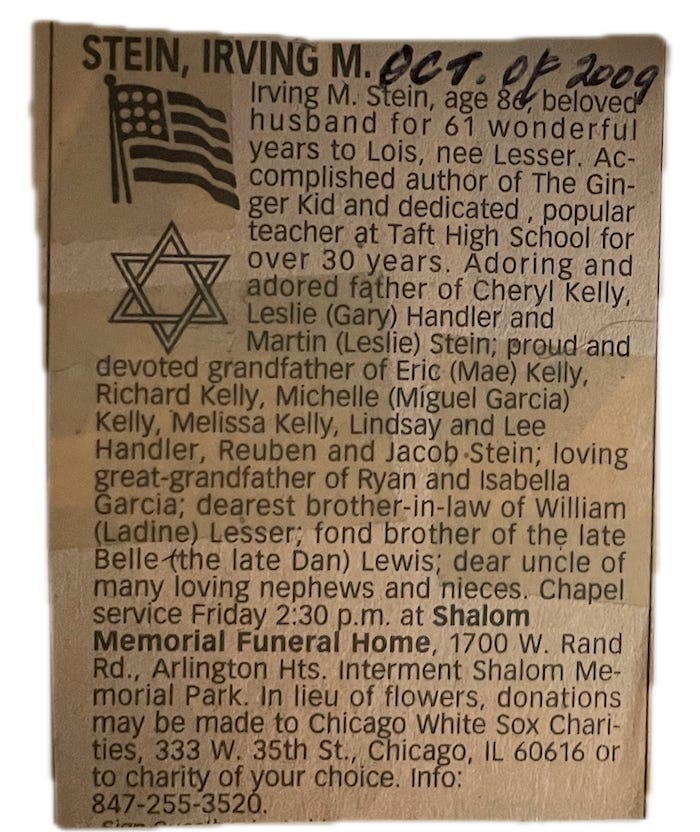
To the side of the inscription was the newspaper notice of Irving Stein’s death. The clipping was yellowed with age.
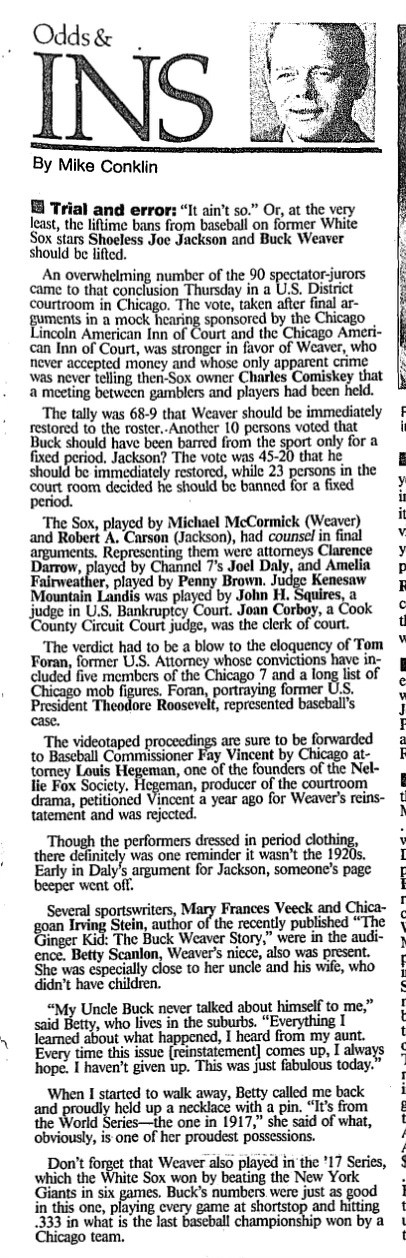
A second clipping was a Friday, June 19, 1992 Chicago Tribune “Odds & INS” column by sportswriter Mike Conklin. The previous day a mock trial was held in a US District courtroom. Actors portrayed Weaver and his teammate Shoeless Joe Jackson. They were represented by famed attorney Clarence Darrow, as interpreted by Joel Daley, a news anchor for Chicago’s ABC affiliate. Daley had great qualifications for the part. Well into his reporting career he went back to school, earning a juris doctrate from Chicago-Kent College of Law in 1988. Prosecuting attorney on behalf of Major League Baseball was none other than Theodore Roosevelt. Taking on the role of the former president was attorney Thomas Foran. His name should be familar to any student of Windy City history. Foran was prosecuting attorney in the Chicago Seven Conspiracy trial; he also went after several top-level members of the Outfit.8 Weaver was played by Michael McCormick, who went on to a notable career on Broadway stages, touring companies, and regional theaters. The jurors—spectators in the courtroom—voted 68-9 in favor of Weaver’s exoneration; another 10 felt Weaver was guilty of participating in the conspiracy.
Among the many in attendance calling for Weaver’s immediate return to baseball was Irving Stein.
There were more unexpected treasures, two personal letters from Stein addressed to John Brow, and one to Brow from a book publicist in Madison, Wisconsin. A quick Google search revealed the two men were retired teachers, former colleagues at Chicago’s Taft High School.
The first letter, from Stein to Brow, was dated February 6, 1992. Odds are we’ll never know what Brow said in his fan letter, but it sure impressed his old friend. “That was a tremendous letter you wrote,” Stein said. “You obviously took great pains to write. I can only say that it’s about time you sat down to write your magnum opus.”
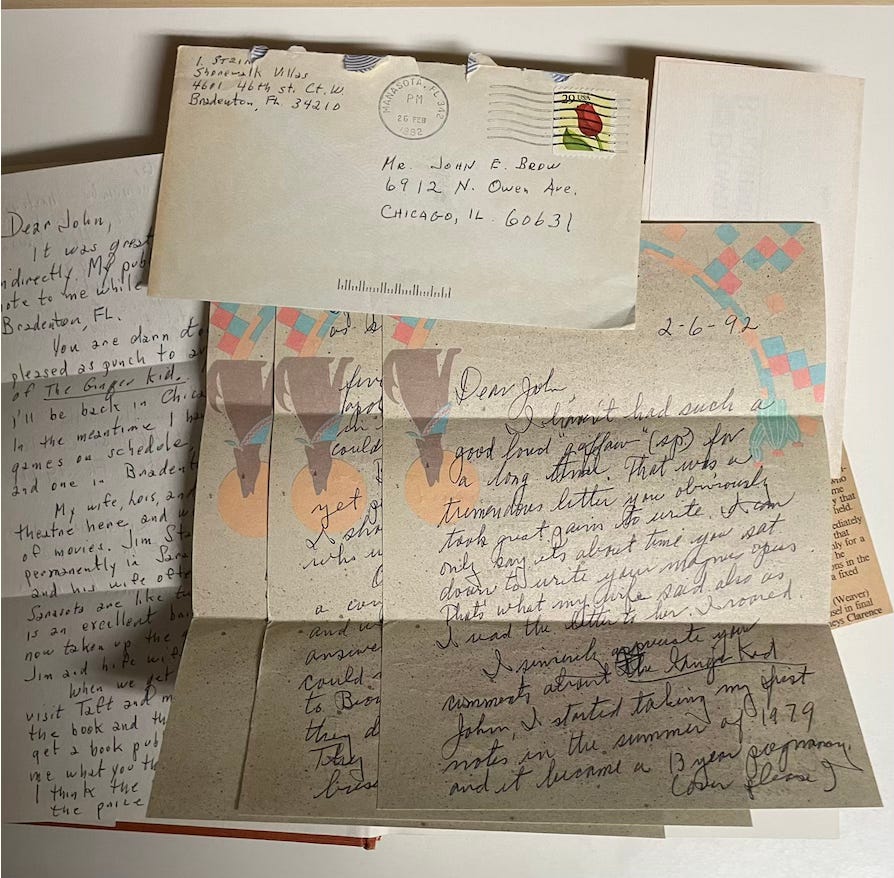
As for Stein’s magnum opus, he goes into details about the agonizing road to publication, a years-long quest filled with rejections, false hopes, and more. Several major New York publishers passed on The Ginger Kid, while two well-known Chicago publishers also rejected the book. “The eastern publishers turned the manuscript down without even glancing at it. They simply answered my query letters by saying ‘it doesn’t fit in with their publishing schedule.’” The pair of Chicago publishers enjoyed the book but “didn’t think it was commercial.”
Getting the book into print, from Stein’s initial notes in 1979 to its ultimate debut was a 13-year journey. The Ginger Kid was released in 1992 by The Elysian Fields Press, an imprint of Brown & Benchmark, a textbook publisher in Dubuque, Iowa. “John,” Stein summed up, “I just hope I deserve the praise you have given The Ginger Kid. Believe me, there were times of doubt, frustration, disappointment. I wondered if I did the right thing leaving Taft (High School) to write the book. I just couldn’t take the kids anymore. And you know what I mean.”9
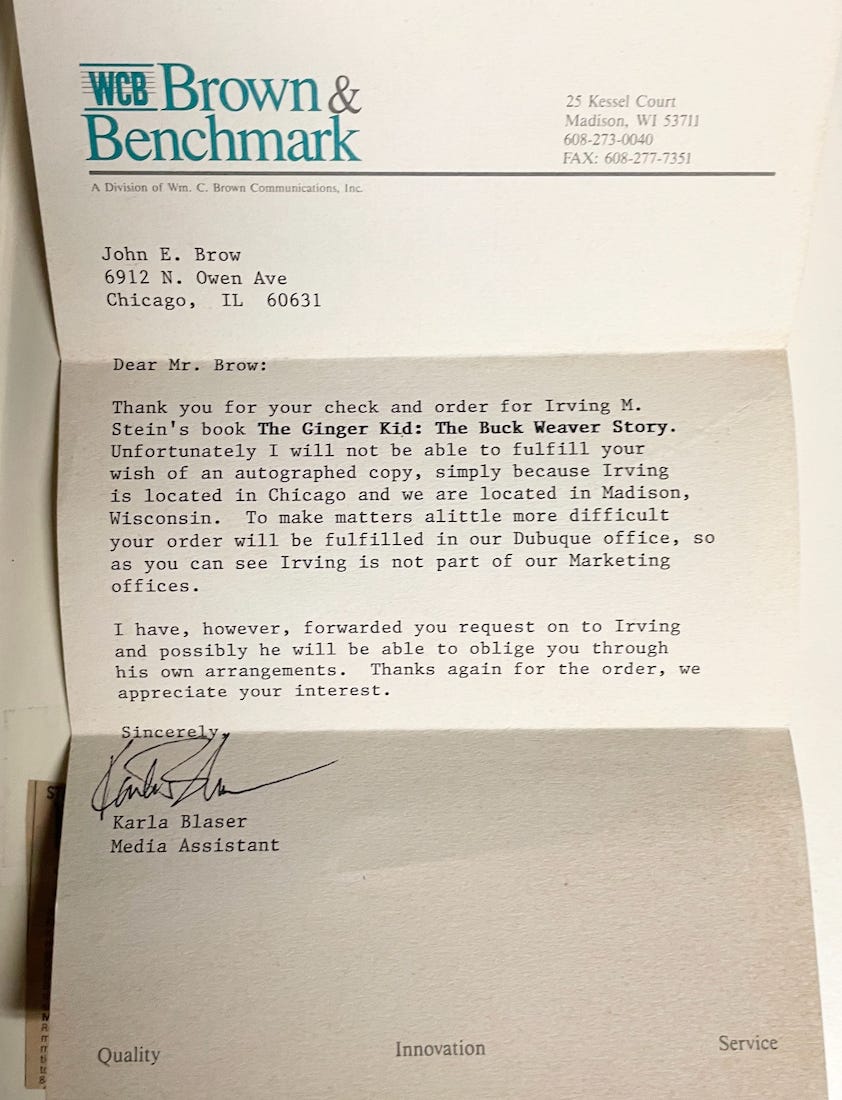
The next letter, undated, was from Brown & Benchmark’s publicity department. The correspondent explained she could not provide Brow with an autographed copy of The Ginger Kid as the company’s PR division was located in Madison, Wisconsin. “To make matters a little more difficult your order will be fulfilled in our Dubuque office, so as you can see Irving is not park of our Marketing offices,” media assistant Karla Blaser explained. However, she promised to forward the request to Stein.
The final letter, dated February 25, 1992, was postmarked from Stein’s winter home in sunny Bradenton, Florida. “You are darn tootin’ I’ll be pleased as punch to autograph your copy of The Ginger Kid,” Stein declared. On a personal note, Stein ribbed Brow a little over an apparent bet made between the two during the 1959 World Series when the White Sox lost to the Los Angeles Dodgers.10 “It’s amazing you remember besting me out of five dollars in ‘59. I ususally don’t forget those things. Hey, I was a Cub fan for one year in 1932.”11
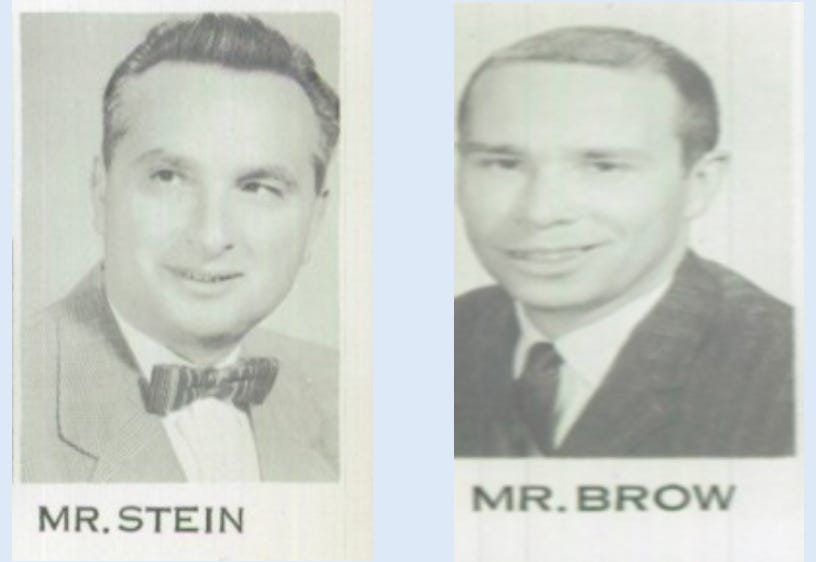
Irving Stein passed away in October 2009. John Brow joined him 10 years later in November 2019.
Epilogue: The Tomb of the Unknown World Series
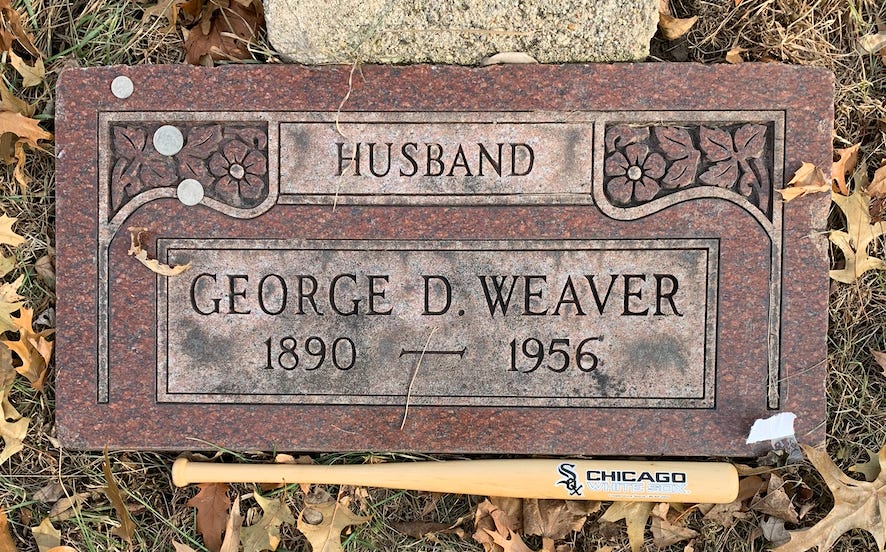
Weaver made six appeals to Major League Baseball, asking to be reinstated. He was turned down each time. In 1953, he wrote to MLB Commissioner Ford Frick, asking one last time for reinstatement. Frick never responded. “There are murderers who serve a sentence and then get out. I got life,” Weaver said. He died at age 65 of a heart attack on January 31, 1956. Weaver is buried in Mount Hope Cemetery in Chicago, not far from where I live. His headstone reads “Husband 1890 — 1956 George D. Weaver.”His wife, Helen, who died in 1965, is buried next to him in an unmarked grave.
On the 100th anniversary of the Black Sox Scandal, I went to Mount Hope to pay my repects. I left a minture White Sox baseball bat in Weaver’s honor.
On May 13, 2025, MLB Commissioner Rob Manfred reinstated Buck Weaver and Shoeless Joe Jackson, along with their six teammates Eddie Cicotte, Oscar “Happy” Felsch, Arnold “Chick” Gandil, Fred McMullin, Charles “Swede” Risberg, and Claude “Lefty” Williams, and disgraced Cincinnati Reds legend Pete Rose. All will be eligible for consideration to the Baseball Hall of Fame in 2027, though there is no guarantee any of these disgraced players will ever be inducted.
“After every game, fifty, one hundred or more fans would stand near the clubhouse to watch the players leave in their civilian clothes. Someone would call out praise and encouragement to the players. Buck Weaver was always greeted especially. He was, perhaps, the most popular on the team.”
James T. Farrell, “I Remember the Black Sox,” My Baseball Diary (1957)
Thanks for reading The Typewriter’s Collage. Connect with me on Bluesky at the handle @RealArnieB. I’m on LinkedIn and Facebook under my real name. While you’re at it, click your cursor over to my website www.arniebernstein.com.
The Typewriter’s Collage is always free. You can support my work when you Buy Me a Coffee. Special perks are available. Click on the graphic for details.

Looking for a 1:1 consultation for your writing project, tutor, workshop facilitator, writing coach, editor, speaker, ghostwriter, or something else? Book a free 30-minute Zoom conference and let’s talk. Here’s my Calendly schedule.
Books? Baseball? The international battle between the United States and Canada in this year’s World Series? Have at it in the comment section.
Story Links:
The accompanying website for The Ginger Kid. Filled with great stuff, plus it hasn’t been updated since 2007. It’s like a trip back in time to what a well-designed website looked like nearly a quarter century ago. The Ginger Kid
Though Weaver is now exonerated, you can find lots of information about his career at the website Clear Buck Weaver
History of the Black Sox scandal at The Society for Baseball Research
Gambling on Baseball From Criminal to Commonplace at Baseball Is My Life
Contemporary newspaper articles chronicling the 1919 Black Sox scandal at Library of Congress website.
How and why Buck Weaver was finally reinstated in 2025 at ESPN
Both the book and film of Eight Men Out are considered definitive retellings of the 1919 Black Sox Scandal. Horse feathers. Both are filled with errors and deliberate distortions of fact. It’s all chronicled at The Society for American Baseball Research.
The Society for American Baseball Research also blows apart eight myths about the 1919 White Sox team
Is throwing the World Series a Chicago tradition, starting with the 1918 Chicago Cubs “losing” to the Boston Red Sox? Maybe, maybe not. An ESPN article, retrieved from Internet Archive digs into the rumors.
Read (or reread) The Book of Job at the Jewish Virtual Library
And just because you made it this far, here’s your bonus content:
Footage from the 1919 World Series, including Buck Weaver. There’s no question he played his best throughout each game.
A kippah is also known as a yarmulke or koppel, though I’ve rarely heard the latter used.
At least the 2025 White Sox weren’t the worst team in baseball. The Colorado Rockiers clocked in at 43-119. Ironically, in both 2024 and 2025, the Sox had a better win-loss record in the final days of the season. Sigh….
For non-Chicagoans, here’s a lesson in Windy City baseball. I, along with most White Sox fans, have two favorite teams. The White Sox and whoever plays the Cubs.
Dead Ball Era baseballs didn’t have the zing! when bat and ball connect like today. Generally speaking, in the early days of professional play only one or two baseballs were used per game. Fans didn’t keep foul balls back then, but tossesd the baseball back onto the field so the game could continue. By the ninth inning hitters were swinging at dirty, scuffed, and waterlogged spheres with all the predictability of your average housefly. Spitballs and other illegal pitcher “adjustments” to a game ball also contributed to a ball’s flight from mound to home plate.
Fun fact: On the mound for the Red Sox was their new pitcher, George Herman “Babe” Ruth.
Two years later McMullen was also indicted in the Black Sox scandal.
When it comes to resale value, signed first editions is where the money is at.
“The Outfit” is the name for organzied crime in Chicago. It dates back to the days of Al Capone.
And if you’ve ever been a teacher, you know damn well what Stein means.
Kind of ironic, isn’t it?
See Endnote Number 4
As a typewriting baseball fan, this post was a home run. "I don’t need to read The Book of Job. I’m a White Sox fan," made me laugh aloud.
Lots to follow up on here. Especially the story of gambling at Fenway Park and the potential thrown 1918 series. Mmm.
Unrelated, but in my stash of typewriters is an early Royal owned by Red Sox second base legend, Bobbie Doerr. (https://www.instagram.com/p/CB9Y6n_l6zb/) He was the steady Eddie who kept Ted Williams in equilibrium and sounds like a wonderful person. I love it when two passions overlap, as you so eloquently detail here with books and the White Sox. With the Pope on your side, hopefully no need for that sacrificial goat.
The best yet Arn. Mazel Tov on this well researched, fantastically written piece. I'm keeping it.